A cultural reading of the growing demand for authorship, human presence, and proof of origin.
But saturation changes what people see.
The more synthetic content spreads, the more human irregularity becomes culturally valuable.
Saturation precedes
cultural reorganization.
The saturation of synthetic aesthetics is an ongoing cultural recalibration. Imperfection, verifiable origin, visible human cost: where there was once only limitation, there is now value.

In three years, preference for AI-generated content fell 34 percentage points among consumers in the US and UK. This happened while adoption among brands and creators was accelerating.
The figure comes from a Billion Dollar Boy study of 6,000 people in the US and UK, conducted in 2025. In 2023, 60% of consumers preferred AI-generated content. By 2025, just 26%.
The paradox is the argument: while 79% of marketers increased their investment in AI-generated content over the past year, audiences moved the other way. The market is producing more than people want to consume.
More than 40% of long-form content on Facebook is currently produced by AI, according to an estimate by Originality.ai, an authorship verification tool cited in an EY study published in July 2025. The figure grew rapidly following the launch of ChatGPT in late 2022. Saturation is not only a cultural perception. It can already be observed in the composition of what circulates.
It is a reaction to technology's success.
When something multiplies without friction, without cost, without limit, the perception of what holds value starts to shift. The signal appears when that discomfort stops being individual and starts emerging in different places, at the same time, without coordination.
Global screen time peaks during the pandemic.
DALL-E and MidJourney launch as public tools.
ChatGPT launches. Consumer acceptance of AI-generated content: 60%.
Billion Dollar BoyThe r/analog community, on Reddit, passes 2.7 million members. One of the largest global forums devoted to film photography, chemical processes, and analog aesthetics.
The analog film camera market grows 7.3% annually. 'AI slop' begins circulating in forums in August.
MeltwaterGhibli AI: negative sentiment 20 times above average within 48 hours. Meltwater
'AI slop' named Word of the Year by the Macquarie Dictionary, Australia's leading English dictionary. The vocabulary of AI fatigue enters the mainstream lexicon. Dec 2025.
Fresta detects 8 converging signals. From emerging behavior to systemic recalibration.

FIELD RECORD · Flea market · Berlin · May 2026 · Analog search for a specific object in a physical context. The opposite of algorithmic discovery.
Human presence is no
longer assumed.
AI Fatigue grows alongside synthetic production.
It is the emotional exhaustion produced by synthetic repetition, excessive optimization, aesthetic homogenization, and relentless algorithmic mediation.
- Distrust of polished outputs
- A desire for traces of authorship
- Preference for visible process over invisible automation
- Skepticism toward AI-mediated intimacy
- A search for emotional credibility
- Demand for proof of human origin
Fatigue is not only aesthetic. In March 2026, researchers at the Boston Consulting Group reported a phenomenon they called 'brain fry': a cognitive overload associated with the continuous supervision of multiple AI agents. Participants described difficulty concentrating, increased errors and decision fatigue caused by the effort of coordinating autonomous systems in parallel, not by the work itself. The phenomenon extends this reading: fatigue does not appear only in the consumption of synthetic content. It also emerges in the everyday experience of operating in environments increasingly mediated by artificial intelligence.
Human presence became something to demonstrate, not assume. Perceived, declared, evidenced, or felt.
Through process, materiality, imperfection, and origin.
This is behavioral data, not aesthetic taste. Fresta's monitoring documents five specific occurrences that, taken together, define the pattern:
The verification of human origin now functions as a value criterion before any formal judgment of quality.

Neukölln Oper · Berlin · 2026 · The poster uses a ballerina's feet with blood and bandages as its main image. An editorial choice about what makes something undeniably human: the visible physical cost of the process.
-
01
Neukölln Oper, Berlin, 2026. The promotional poster for a local production shows a ballerina's feet: blood, bandages, visible physical strain. A deliberate editorial choice. The implicit question: who is willing to pay with their body for what they make?
-
02
'No AI' declarations in creative portfolios. Photographers, illustrators, and designers have been adding human-process statements to their portfolios since 2024. Declaring 'made by a human' was redundant before 2023. Now it functions as a positioning argument, because the default has changed.
-
03
Briefs asking for imperfection. The vocabulary of communications briefs has shifted: 'organic', 'unpolished', 'looks handmade', 'no AI feel' are recurring requests that did not exist three years ago. The market has begun to reward what appears to carry a visible human cost of production.
-
04
'Was this made by AI?' The question has been appearing with increasing frequency in categories where authorship matters: art, journalism, design, food, fashion. A new layer of evaluation inserted into the act of consumption, one that did not exist before 2023.
-
05
The Ghibli AI reaction, March 2025. Studio Ghibli is perceived as the product of decades of artisanal labor. Applying AI to that perception triggered a disproportionate response, revealing an underlying emotional state: people draw lines around where automatic synthesis is not acceptable. Years earlier, Hayao Miyazaki had described a demonstration of AI-generated animation as 'an insult to life itself'.

FIELD RECORD · Handwritten note · Kreuzberg, Berlin · May 2026 · Manual communication in public space. The choice of handwriting over print or digital makes the origin of the gesture immediately readable.

FIELD RECORD · PARIS · MAY 2026 · Printed photographs, frames, negatives, and visible processes. The materiality of the image returns as cultural value.
From Human Signal to Human Label
When synthetic production becomes abundant,
human origin becomes a visible attribute.
What begins as residue, gesture, or imperfection becomes formalized as a seal, proof, and market language.
Authorship stops living only in the process.
It becomes declared.
Origin stops being assumed.
It becomes communicated.

The Human Made Mark · thehumanmademark.com · Certification for AI-free productions · Pech Merle, France · April 2026
AI Fatigue is exhaustion with synthetic aesthetics, an exhaustion that makes verifiable humanity more valuable. The central phenomenon is depletion from repetition, expressed at times as nostalgia.
Signal Map · Fresta
Stage
→ x: reach
↑ y: maturity
8 signals · Jun 2026
Scores updated July 2026 to reflect the intensity_v2 methodology, adopted after editorial close. Original values: Local Friction 34 · Soft Refusal 27 · Interface Exhaustion 10.
Open Map →Ownership 11
Exhaustion
Territory
Scores reflect the state of signals at the moment of this convergence. Future trajectories may alter intensity, stage, and the relationships between signals.
The hypothesis came later.
The signals came first.
Revisiting Fresta's portfolio, we found eight independent signals pointing in the same direction, each documented in distinct sectors, through its own methodology.
The hypothesis revealed what the portfolio already contained, eight signals already pointing in the same direction before they had a shared name.
Signals detected by Fresta
Soft Refusal
An aesthetic withdrawal from digital overstimulation: slow mornings, analog routines, silence as aspiration. A selective reduction in availability and immediate response, gradual rather than a frontal break. As synthetic experiences become abundant, growing value is placed on what demands presence, time, and deliberate choice.
Digital Folklore
Local cultural practices reinterpreted and circulating in digital environments without a direct connection to their source. Memories, references, and specific codes begin to function as context markers. When content starts to feel produced by the same logic everywhere, cultural accents and local repertoires gain force as evidence of belonging.
Interface Exhaustion
Fatigue with overly polished interfaces, prompts, and outputs. Digital mediation now demands more verification than automatic trust. Origin has become a legitimate question before any quality judgment, and 'made by a human' has become a positioning argument.
Hyperlocality
Verifiable territorial origin, belonging to a specific neighborhood, city, or community, as a resource of trust and proof of existence. When synthetic content feels globally undifferentiated, local specificity functions as evidence of authorship: someone was in a real place to produce this.
Local Friction
Traceability as value: knowing who made something, where, and under what conditions. Verifiable origin begins to influence decisions as much as the final result. As production becomes more homogeneous, process acquires its own economic and cultural weight.
Permanent Ownership
A growing interest in durability, repair, and long-term possession. Value migrates toward objects that accumulate histories of use, maintenance, and permanence. In a context of abundance and constant replacement, signals of continuity and material attachment become more visible.
Manual Residue
The revalorization of visible imperfection and exposed process as quality markers. The trace of the hand returns as a perceived differentiator. Where automation produced aesthetic homogenization, visible human choice has come to function as a signature.
Body as Territory
The body as evidence of presence: effort, practice, wear, scar, and accumulated experience become visible markers of human trajectory. When images can be produced at scale, perceived physical cost gains relevance as proof of dedication, experience, and time invested.
The data below corroborate the signal, independently produced by Fresta.
They are third-party evidence, unrelated to Fresta, pointing in the same direction. Their strength lies in that independence.
Consumer preference for AI content over three years. A fall of 34 points while brand investment was rising. Survey of 6,000 people in the US and UK.
Billion Dollar Boy · 2025Growth of the global artisanal market. From USD 1.2 trillion in 2025 to a projected USD 2.9 trillion in 2034. The handmade market grows at double digits while preference for AI content falls.
Fortune Business Insights · 2025Across 23 markets, 85% of people used AI in the past six months. The most telling data point is the gap: use is growing faster than trust.
EY AI Sentiment Study · 2026'AI slop' gains traction in forums · 461K mentions in the year
461K mentionsOpenAI Ghibli AI · peak negative sentiment 20x above average
20x averageORIGIN DISCLOSURE · Between 2024 and 2025, platforms began introducing mechanisms to identify AI-generated content. Pinterest expanded filters and viewing controls. Meta began displaying synthetic content labels on Facebook and Instagram. Google incorporated provenance metadata through initiatives linked to the C2PA standard. The movement signals that identifying origin has become a meaningful layer of the digital experience.
+87% mentions(Oct 2025)
AI Slop · From forums to the mainstream: 461K mentions in 2024 and 2.4M mentions in 2025, when the term was named Word of the Year by the Macquarie Dictionary, Australia's leading English dictionary.
2.4M mentions
It is a negotiation with synthetic abundance.
A cultural signal becomes systemic when it appears simultaneously across dimensions that do not communicate with each other.
AI Fatigue appears in the lexicon: a niche term became Word of the Year in 2025.
It appears in consumer behavior: preference for AI content dropped 34 points in three years while investment in producing that content rose.
It appears in the market: the artisanal segment is growing at double digits while trust in AI-generated content falls.
It appears in aesthetics: briefs request imperfection, portfolios declare human process.
It appears in the gap between use and trust: recent global research indicates widespread AI adoption, but also shows that trust is not keeping pace. Fatigue coexists with that growing presence, without amounting to abandonment.
None of these movements were coordinated. All point in the same direction.

FIELD RECORD · Artist studio · Neukölln, Berlin · May 2026 · The workspace as argument. The presence of process in the visible environment. The space preserves evidence of the process that produced it.
High confidence.
Eight convergent signals, independently detected.
Evidence from multiple external sources.
A resistance concept that entered the mainstream lexicon in under two years.
Market behavior aligned.
Brief vocabulary changing.
Origin verification becoming a new, recurring consumer behavior.
AI adoption continues to grow. Investment in AI-generated content continues to rise. The signal is active negotiation, consistent with use that keeps growing. The tension between synthetic production and preference for human traces is the most precise data point of the current cultural moment.
The reading is situated.
It draws from monitored sources, field observation, and human judgment.
Some contexts appear on the radar before others.
Naming a signal is also framing it.
These limits define the scope of the reading, without invalidating it.
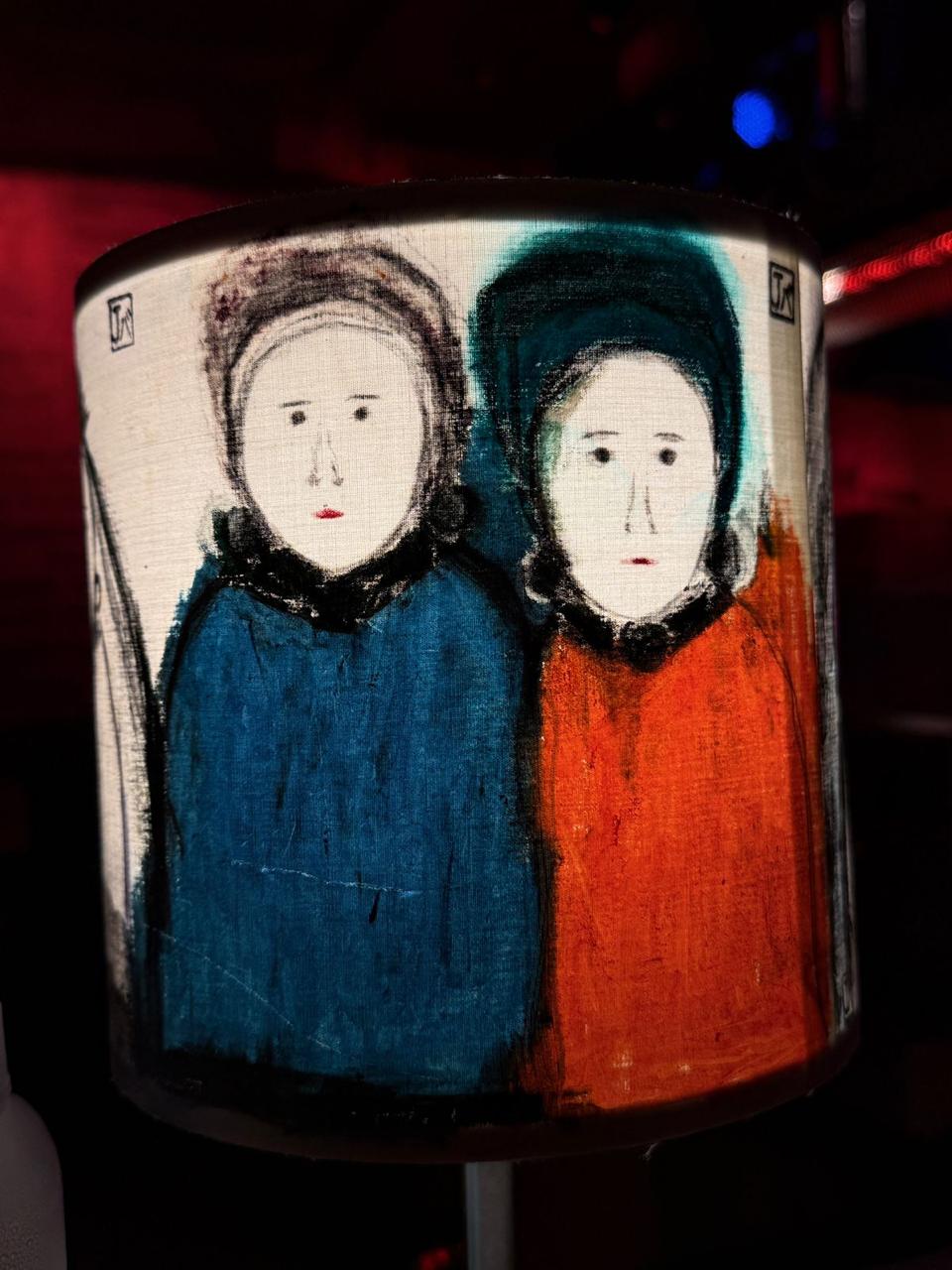
The next cultural differentiator
may be detectable humanity.
The more synthetic aesthetics expand, the more human presence becomes visible as value.
AI Fatigue signals the beginning of a new contest for authenticity,
alongside the continued expansion of artificial intelligence.
In synthetic environments,
trace becomes value.
When synthesis becomes abundant,
origin becomes information.
Proof of origin is becoming part of the value criterion.
Fresta Signals · 2026This report is a dated snapshot: it describes the state of Fresta's signal portfolio in the January to June 2026 cycle. As cultural signals have trajectories, later readings may differ: a signal can gain strength, change direction, saturate, or dissipate. Tracking these variations is part of the method.
- Fresta signal monitoring system
- Internal signal reports
- Per-signal source curation
- Field observation · Berlin · Paris · 2026
- Meltwater · Social Listening Data · 2024–2025
- EY Global AI Sentiment Study · 2026 (23 markets, 18,152 respondents)
- Fortune Business Insights · Handicrafts Market Report · 2025
- Billion Dollar Boy · Muse Two: The Real Impact of AI on the Creator Economy · 2025
- Macquarie Dictionary · Word of the Year · 2025
- EY · AI-generated content fatigue analysis · 2025
- CNN Business · Harvard Business Review · Boston Consulting Group · AI brain fry · March 2026
- 2020 to 2026 · complete timeline
- 2024 to 2025 · external reference data
- January to June 2026 · Fresta detections
- Editorial close: June 2026
- Primary coverage: USA, Europe, and monitored global circuits
- Field observation: Berlin · Paris
- Editorial base: Berlin
High
For Fresta, a signal is a hypothesis about an ongoing cultural formation, one that gains consistency when it appears with variation across contexts that do not communicate with each other.
This reading is classified as high confidence. The grounds: eight convergent signals, independently detected; evidence from multiple external sources; a resistance concept that entered the mainstream lexicon; market behavior aligned; briefs changing; origin verification as a new and recurring behavior.
Researcher of behavior, culture, and consumption. She has worked for over fifteen years at the intersection of brands, language, and social transformation. At Fresta, she develops reading systems to identify emerging signals before they consolidate into cultural trends.
Political scientist and postdoctoral researcher. Responsible for the methodological architecture and source curation at Fresta Signals. Ensures the system knows what it is observing, where each data point comes from, and what may be systematically outside its field of view.
Fresta monitors emerging cultural and behavioral signals before they become trends. It combines AI-assisted collection with human curation and defined reading criteria. AI organizes, aggregates, and measures the circulation of indicators. The cultural interpretation of what these patterns mean is made by people.
This report results from Fresta's daily monitoring, a living system tracking cultural signals across different sources, platforms, and contexts, not from a single research cycle. AI Fatigue surfaced through this continuous process: signals appearing in parallel gradually gained density until they formed a convergence consistent enough to be named.
Contact and access contact@frestasignals.com frestasignals.com